Module 3 Activity Research
Weekly Activities - Project 3
Sandra Krcmar
Project 3 builds on the interaction principles explored in Project 2 by embedding Arduino-based motion sensing, light, and sound within a domestic architectural form.
By housing these interactions inside a scaled housing structure, the project examines how physical context shapes the perception of simple, privacy-conscious ambient notifications.
Project 3
Module 3
Project 3 builds on the interaction principles established in Project 2 by situating Arduino-based sensing, light, and sound within a physical domestic form. While the earlier project focused on translating environmental signals—such as motion—into simple, intuitive, and unobtrusive interactions, this iteration explores how housing those interactions within a recognizable architectural structure affects perception, meaning, and usability.
By embedding a PIR sensor, light, sound, and email notification within a scaled home form, the project examines how context and enclosure influence the way users understand and trust ambient notification systems. The house serves not as a literal smart-home replica, but as a conceptual container—bridging abstract interaction logic with lived domestic experience.
The prototype prioritizes lightweight, privacy-conscious technology over complex smart-home ecosystems, offering a supportive alternative that communicates presence without surveillance. Motion is translated into immediate, tangible feedback—light, sound, and email notification—designed to alert occupants to activity at the threshold without heavy reliance on screens, cameras, or cloud-based systems.
Through guerrilla prototyping and iterative construction, Project 3 moves from open-ended technical exploration toward intentional form-making, demonstrating how interaction design, when grounded in both technological understanding and human context, can remain simple, expressive, and emotionally resonant.
This website presents a consolidated summary of Activities 1 and 2. For a full breakdown—including deeper reflections, challenges, and outcomes—please refer to the comprehensive PDF submission.
Activity 1
The power of prototyping lies in its ability to convey vision quickly and cost-effectively, allowing stakeholders to experience form and function without the expense of a fully realized solution. Although physical prototyping is not my primary passion, I approached this project strategically, balancing time, cost, and quality to achieve a level of fidelity that felt credible and client-ready.
Through iterative exploration—moving from woodcut forms, to repurposed boxes, and ultimately to a LEGO house—I selected a structure that offered both visual impact and the spatial flexibility needed to house the Arduino, PIR sensor, light, and sound components. By intentionally constructing only the exterior base, I preserved structural integrity and visual clarity while saving time.
This resourceful approach, shaped by budget and material constraints, enabled meaningful technical growth, deepening my understanding of Arduino, circuitry, and sensor-based interactions, and extending my decade-long UX/UI practice into the physical realm.


Activity 2
Activity 2 focused on validating the technical feasibility of integrating motion sensing, light, and sound into a single, reliable system within a constrained physical enclosure. Each component—the PIR sensor, LEDs, and speaker—was tested independently before being combined, with particular attention paid to calibration and system coordination.


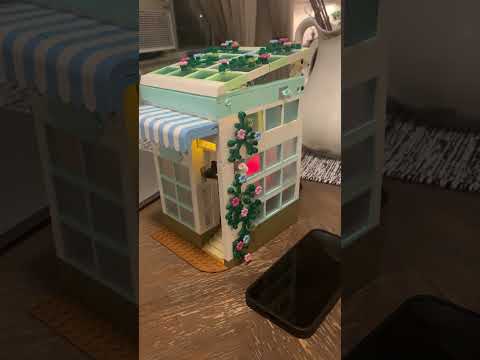
This video shows the final prototype with embedded circuitry, where waving a hand at the entrance triggers the PIR sensor to activate a light, sound a doorbell, and send an IFTTT email notification to a phone, repeated three times to demonstrate interaction.